A painted built-in can look refined and perfectly tailored whether its doors are made from wood or MDF. The difference reveals itself over years of daily use: at a sink, along a sunlit wall, around a detailed molding profile, or after a season of changing indoor humidity. When considering wood versus MDF, the right choice is rarely about declaring one material superior. It is about selecting the material that best supports the design, location, finish, and long-term expectations for your home.
For custom cabinetry, architectural wall paneling, closets, and finish carpentry, material selection should be decided early. It affects how cleanly a profile can be cut, how a painted finish will wear, how hardware performs, and how confidently the finished work can serve the room for years to come.
Wood Versus MDF: The Essential Difference
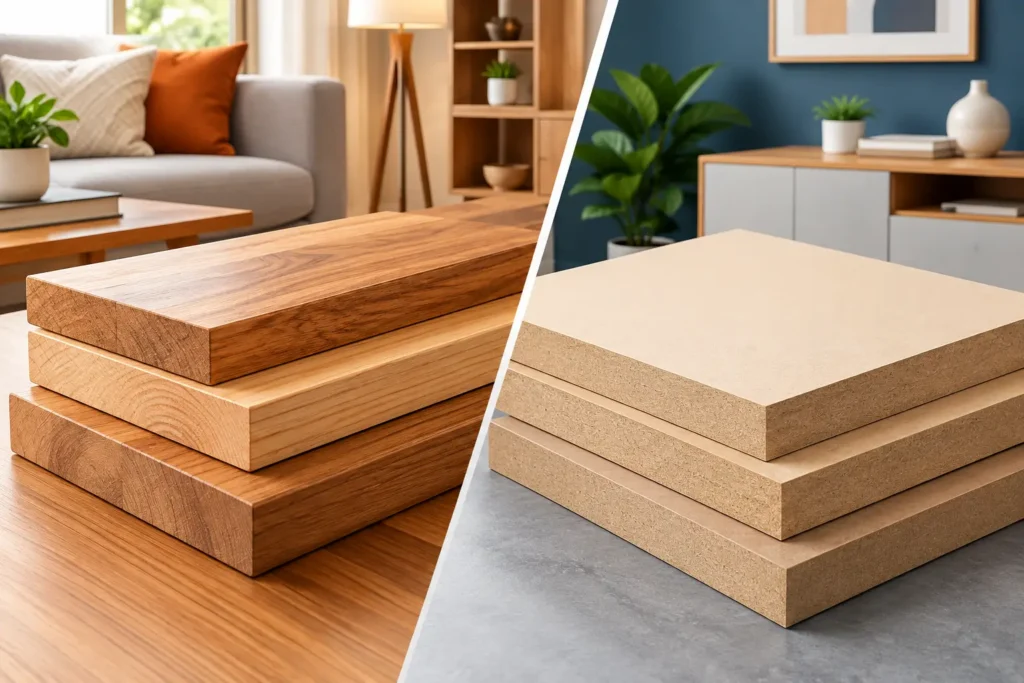
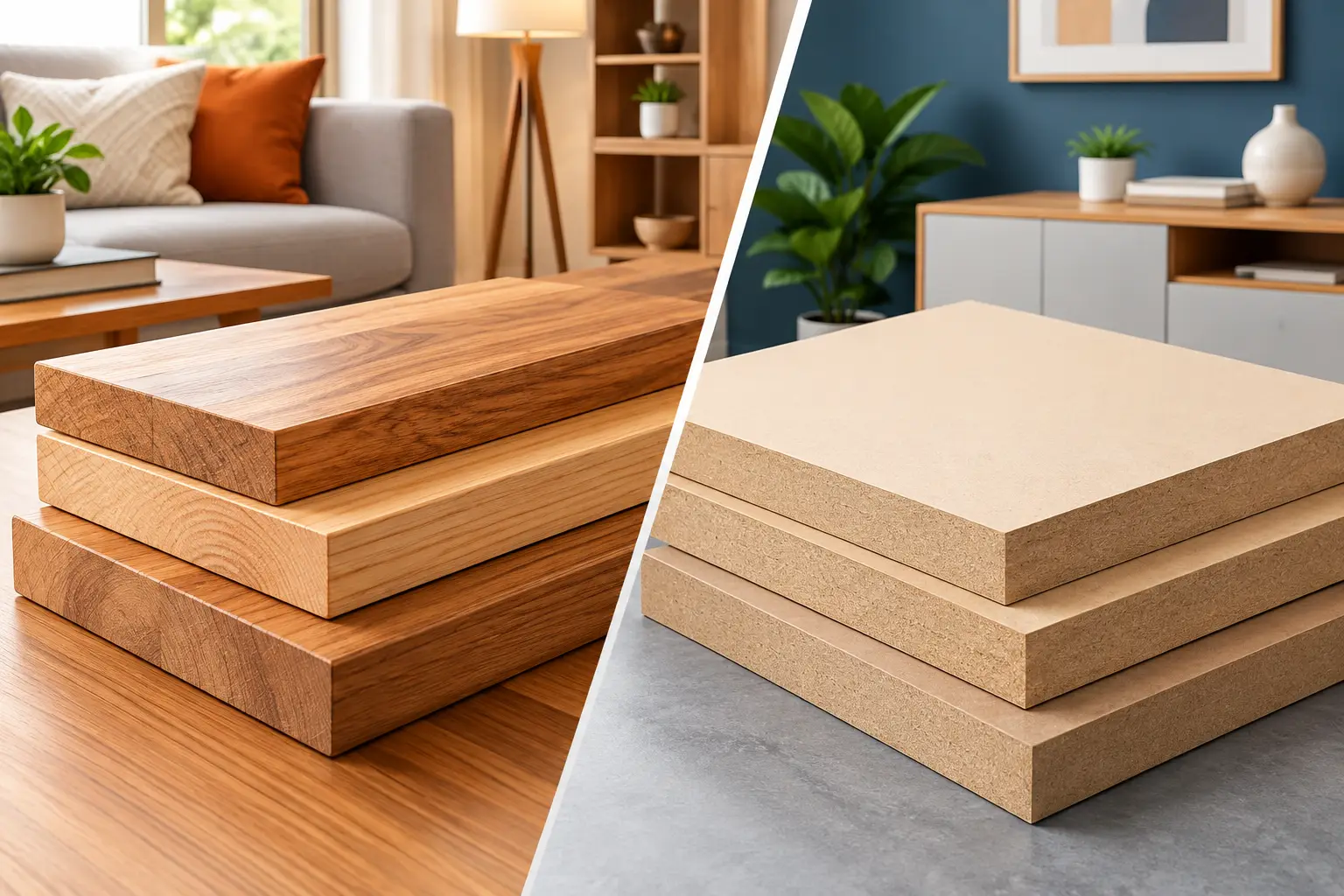
Wood is a natural material with grain, variation, and character. In interior millwork, that may mean solid hardwoods such as maple, oak, poplar, cherry, or walnut, as well as wood-based cabinet components such as hardwood plywood. It brings depth and authenticity that cannot be replicated when a stained or clear-coated finish is part of the vision.
MDF, or medium-density fiberboard, is an engineered panel made from refined wood fibers combined with resin and formed under heat and pressure. Its surface is exceptionally smooth and consistent. It has no grain direction, knots, or natural variations, which makes it particularly well suited to crisp painted work and detailed routed profiles.
Neither material is automatically the premium choice in every application. A well-designed project may use several materials strategically: plywood for cabinet boxes, MDF for painted door panels or wall-paneling components, and solid wood for visible rails, shelves, trim, or areas requiring greater screw-holding strength. What matters is that every component is chosen for a reason rather than treated as interchangeable.
When Solid Wood Is the Better Choice
Solid wood is the natural choice when the beauty of the material itself is meant to remain visible. A walnut media wall, a white oak floating shelf, or maple cabinetry with a clear finish depends on grain, color variation, and the distinctive character that only real wood provides. Each board has its own visual movement, giving the finished installation a sense of warmth and permanence.
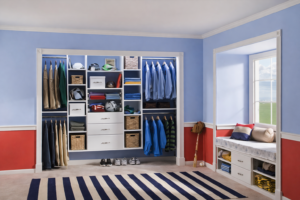
Wood also performs well where strength and fastener holding are priorities. Properly built solid-wood shelving can carry significant weight, and hardwood components are dependable for certain joinery details, furniture-style legs, and high-use features. In custom closets, for example, a solid wood edge or shelf component may be appropriate where a design calls for a thin, elegant profile with reliable support.
There is a trade-off. Wood expands and contracts with seasonal humidity changes. Experienced millwork design accounts for that movement through appropriate construction methods, clearances, and finishing practices. Without that planning, wide solid panels can shift, joints can telegraph, and painted surfaces may develop small lines at seams over time.
For painted cabinetry, solid wood is often used for door frames, but it requires careful material selection and construction. Poplar is commonly favored for paint-grade trim and certain cabinet components because it machines cleanly and accepts paint well. Still, its natural movement remains part of the equation.
Best uses for wood
Wood is often the strongest fit for stained cabinetry, natural-finish shelving, furniture-inspired built-ins, exposed decorative beams, and any feature where grain is central to the design. It is also valuable for components that need substantial structural strength or durable fastening.
Where MDF Delivers a Better Painted Finish
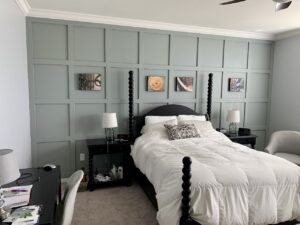
MDF earns its place in high-quality interior work because it is stable, smooth, and highly consistent. For a painted wall treatment, built-in bookcase, decorative panel system, or cabinet door with a routed detail, MDF can produce exceptionally clean lines. There is no grain texture rising through the paint and no knots requiring special treatment before finishing.
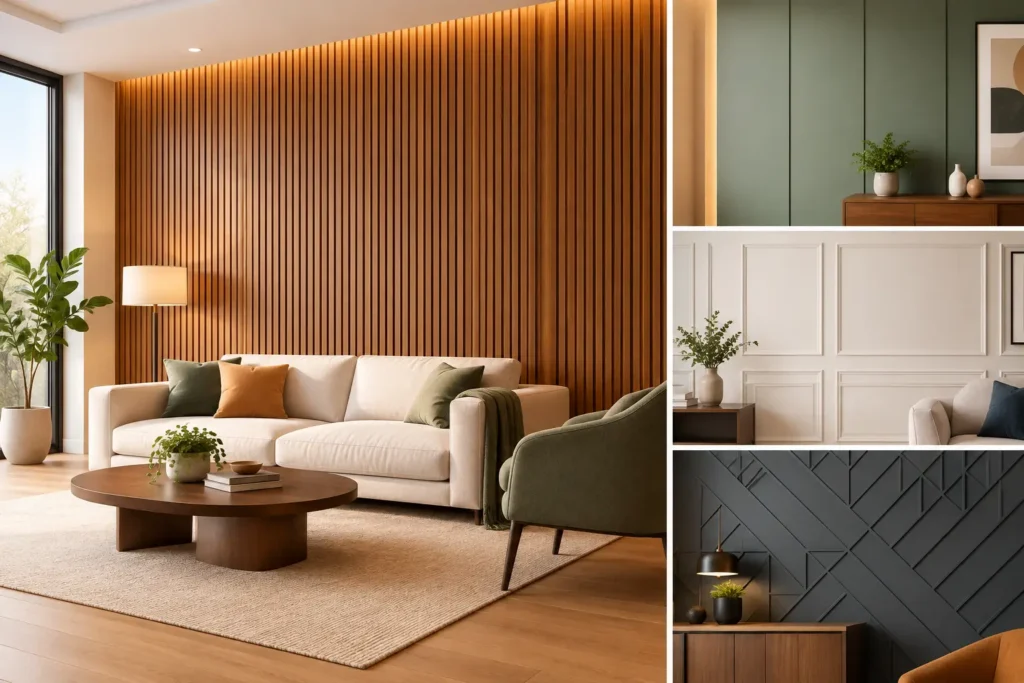
That smoothness is especially valuable in formal spaces where the eye notices every shadow line. A tailored board-and-batten wall, fluted panel detail, fireplace surround, or painted library can benefit from the precise, uniform appearance MDF provides. When properly fabricated, installed, caulked, and finished, it creates a polished surface that supports a timeless interior rather than competing with it.
MDF is also more dimensionally stable than solid wood in many interior conditions. It does not expand and contract along a grain pattern in the same way wood does. That makes it a practical choice for wide painted panels and detailed moldings where consistent reveals and clean joints matter.
However, MDF is not suited to every location. Standard MDF is vulnerable to moisture. Once water reaches an exposed edge or damaged finish, the fibers can swell, soften, and lose their shape. A quality paint system helps protect the surface, but it does not make standard MDF appropriate for wet conditions or areas at risk of repeated leaks.
MDF is also heavy and does not hold screws as reliably as solid wood or plywood when fasteners are repeatedly removed or heavily loaded. Professional installation addresses this through proper joinery, backing, fastener selection, and wall attachment. Those details are not visible after completion, but they are essential to a durable result.
Best uses for MDF
MDF is an excellent option for dry, climate-controlled rooms with painted finishes: interior wall paneling, decorative molding, cabinet door panels, built-ins, painted shelving with appropriate support, and detailed architectural trim. It is often the material that allows fine profiles and smooth painted surfaces to look their best.
Do Not Treat Cabinet Boxes, Doors, and Trim as One Decision
A common mistake is asking whether an entire cabinetry project should be wood or MDF. Custom work is more precise than that. Cabinet boxes, doors, drawer fronts, shelves, face frames, and decorative end panels each perform different jobs.
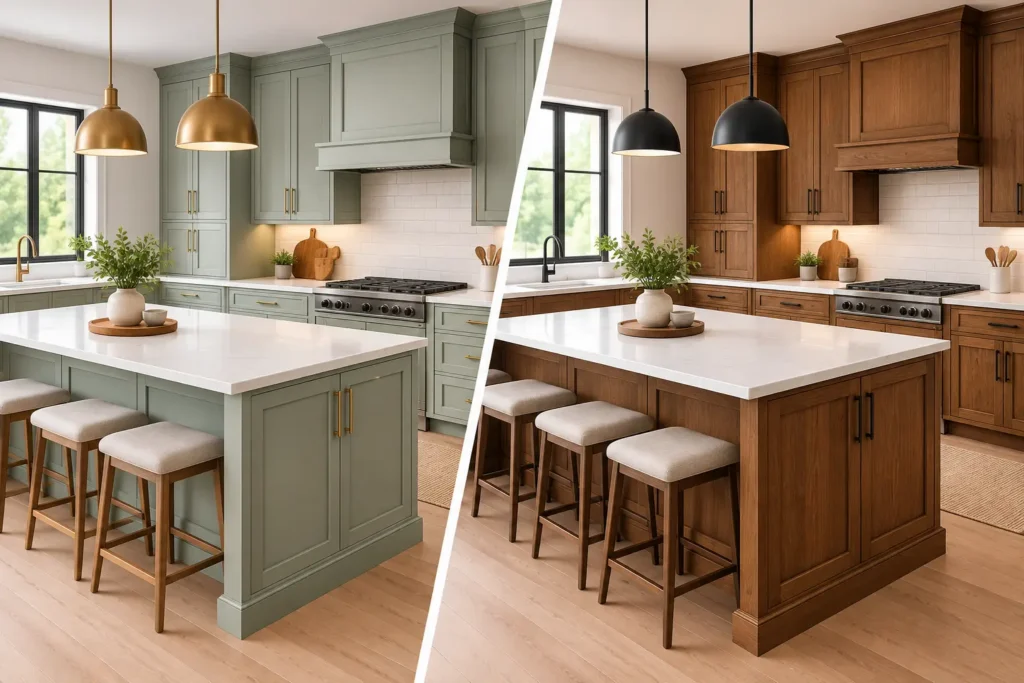
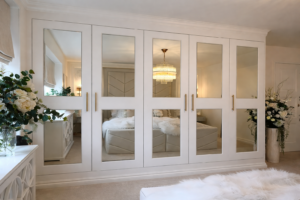
For kitchen and bathroom cabinetry, cabinet boxes are often best built from high-quality plywood because it offers strong screw holding, good stability, and better resilience in areas where occasional moisture is possible. Door construction may combine solid wood frames with MDF center panels for a painted kitchen, reducing movement while preserving strength at the joints. A slab-style painted door may be made from MDF when its edges and finish are properly detailed.
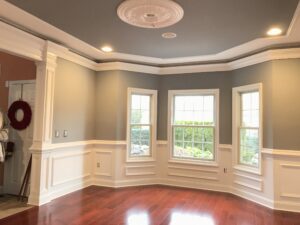
The same thinking applies to architectural millwork. A painted ceiling treatment may use MDF moldings for clean profiles, while solid wood blocking and cleats provide secure support behind the scenes. A custom window seat may use plywood for the structural body, hardwood for a visible natural-finish cap, and MDF for painted decorative trim.
This material discipline is one reason tailored millwork feels different from mass-produced installation. The finished room looks cohesive, but the construction behind it has been designed around performance.
Moisture, Maintenance, and Everyday Use
Room conditions should carry real weight in the decision. Near a bathroom vanity, laundry area, exterior door, or kitchen sink, the potential for humidity and water exposure changes the recommendation. Moisture-resistant MDF is available for selected applications, but it should not be viewed as waterproof. It still requires careful edge sealing, a durable finish, and sensible use in an appropriate location.
Solid wood is not immune to moisture concerns. It can cup, warp, or split when exposed to major swings in humidity or direct water. Plywood often provides the most practical middle ground for cabinetry interiors and utility areas, particularly when finished edges and durable coatings are part of the build.
Maintenance also depends on the finish more than the material alone. A professionally applied paint system, well-sealed edges, and careful installation all help painted millwork remain refined. Wood with a clear finish benefits from routine dusting, gentle cleaning, and protection from prolonged standing water or harsh chemicals.
Cost Should Reflect the Complete Installation
MDF is generally less expensive than premium hardwood, but material cost is only one part of a custom project. Design development, fabrication, finishing, hardware, site preparation, and precision installation all shape the final investment. A less expensive sheet good can become a high-end result when it is specified correctly and finished with care. Conversely, expensive hardwood cannot compensate for poor construction or imprecise installation.
The most valuable question is not simply, “Which costs less?” It is, “Which material will look right and perform reliably in this specific location?” A stained white oak built-in deserves real wood because the grain is the design. A painted paneled hallway wall may be better served by MDF because consistency, crispness, and paint quality are the priorities.
A Material Plan Built Around Your Home
The best material plan considers the architecture already present in the house. A historic-inspired home may call for wood details with visible character, while a clean transitional interior may benefit from smooth painted MDF paneling and tailored cabinetry. Many homes need both.
At DoMolding, that decision begins with the room itself: how it is used, what it must store, how much light it receives, and how the new work should relate to surrounding trim, flooring, and finishes. With more than 25 years of hands-on experience, the goal is not to force one material into every project. It is to create refined interior craftsmanship with the right balance of beauty, durability, and function.
Choose the material that supports the life of the room, then insist on the details that make it last: thoughtful construction, clean installation, protected edges, and a finish worthy of the work beneath it.