A bare wall can make even a carefully furnished room feel unfinished. The best interior wall panels do more than add decoration: they establish proportion, introduce architectural character, and give a room the considered finish that paint alone rarely achieves. The right choice depends on the room, the home’s existing details, and how the paneling will be built and installed.
For homeowners investing in a lasting interior improvement, wall paneling should be treated as millwork, not a temporary accent. Material quality, layout, joinery, and finish all affect whether the result feels refined for years or looks dated after one season.
What Makes the Best Interior Wall Panels?
There is no single panel style that suits every home. A paneled dining room may benefit from formal, full-height box molding, while a family room often calls for quieter vertical paneling that adds warmth without competing with furniture or artwork. The best choice is the one that feels native to the architecture rather than applied as an afterthought.
A successful installation begins with scale. Panel dimensions should respond to ceiling height, window placement, door casings, and the width of the wall. Narrow panels on a broad, tall wall can look busy. Oversized panels in a modest room can feel heavy. Thoughtful spacing creates visual order and lets the room retain a calm, tailored appearance.
Durability matters just as much. Interior walls experience chair contact, moving furniture, children, pets, and routine cleaning. Panels should be stable, properly fastened, and finished with coatings suited to the room’s use. Precision at corners, outlets, transitions, and baseboards is what separates permanent architectural paneling from a cosmetic surface treatment.
Painted MDF Paneling for Clean Architectural Detail
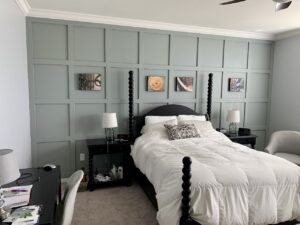
For many Central New Jersey homes, painted MDF paneling offers the strongest balance of design flexibility, smooth finish, and value. MDF is dense, consistent, and free of grain, making it particularly well suited to painted wall treatments such as picture-frame molding, board-and-batten layouts, recessed panels, and traditional wainscoting.
When fabricated and installed correctly, MDF creates crisp lines and a polished painted surface. It can be tailored to suit Colonial, transitional, contemporary, and updated traditional interiors. The material is especially effective when paneling must coordinate with existing crown molding, baseboards, door casings, or custom cabinetry.
Its limitations should be respected. Standard MDF is not the right choice for locations subject to repeated moisture exposure, such as an improperly ventilated bathroom or a below-grade wall with dampness concerns. In these settings, moisture-resistant products and careful site evaluation are essential. Even in dry rooms, the edges and joints require thorough sealing before painting to protect the finish and maintain a clean appearance.
Best applications for painted paneling
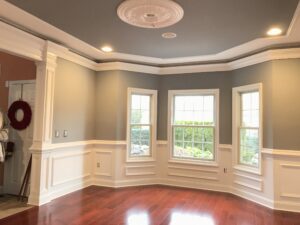
Painted MDF is a natural fit for dining rooms, foyers, hallways, stairwells, home offices, bedrooms, and living spaces. Full-height wall treatments can bring definition to a large room, while lower wainscoting helps protect high-traffic walls and introduces an architectural break between paint colors or wallcoverings.
The color choice changes the effect. A paneling color that closely matches the wall feels quiet and expansive. A deeper tone can make a library, dining room, or powder room feel more intentional. The goal is not contrast for its own sake, but a finish that supports the room’s light, furnishings, and overall architecture.
Natural Wood Panels for Warmth and Texture
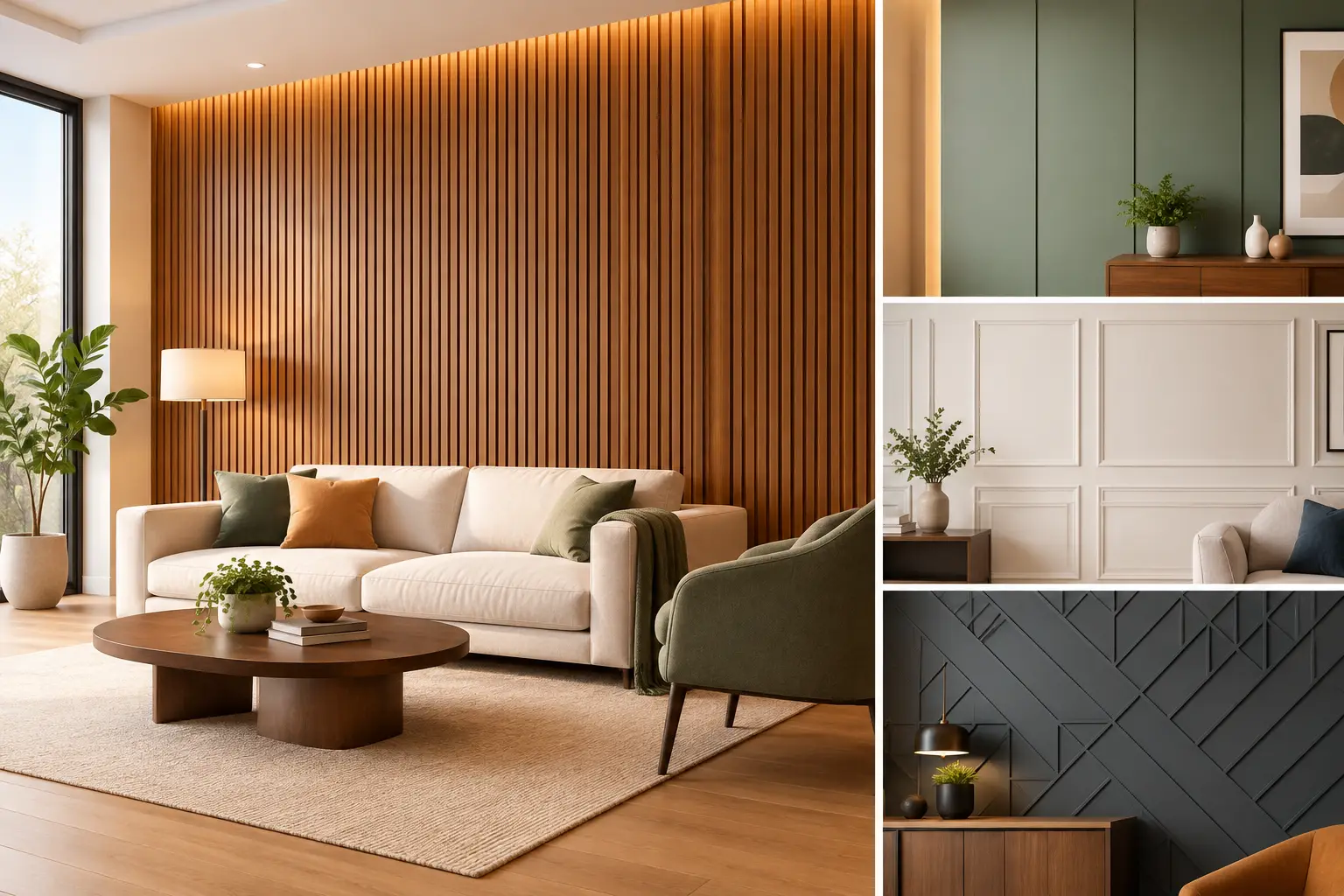
Natural wood wall panels offer something painted materials cannot replicate: grain variation, depth, and warmth. White oak, walnut, maple, and other hardwoods can bring a sophisticated, organic quality to feature walls, entryways, offices, and built-in media areas. Wood veneer panels can achieve a similar visual effect where a stable engineered substrate is preferred.
Wood slat walls have become a popular option, particularly in modern and transitional homes. Their vertical rhythm can make ceilings feel taller and can soften rooms with hard surfaces. Yet they are not automatically the best answer for every wall. A slat feature needs enough open space around it to read clearly; placed behind crowded shelving or competing artwork, it can feel unnecessarily busy.
Wood also requires a more deliberate approach to color matching and finish selection. Each board or veneer sheet has natural variation. That character is part of the appeal, but it should be planned across the whole composition rather than treated as an inconsistency. A quality clear finish protects the surface while preserving the material’s natural tone.
Solid Wood and Plywood Panels for High-Impact Spaces
Solid wood panels and furniture-grade plywood are strong choices where a substantial, custom appearance is the priority. They can be used for contemporary flat-panel walls, rich library interiors, custom media walls, or detailed traditional designs. These materials offer excellent durability and an authentic feel, particularly when paired with custom shelving, cabinetry, or integrated lighting.
The trade-off is cost and movement. Solid wood expands and contracts with seasonal humidity changes, so its installation must allow for that natural behavior. Plywood is generally more stable but still needs careful edge treatment and a finish appropriate to the space. Neither material should be selected solely because it appears more premium. The design, exposure to light, humidity conditions, and desired finish should guide the decision.
In a well-designed project, wood paneling can connect separate elements of a room. A walnut-paneled wall, for example, may relate to a custom desk, floating shelves, or a fireplace surround. This level of coordination produces a more complete result than an isolated accent wall.
Panel Options for Bathrooms, Mudrooms, and Other Demanding Areas
Rooms with humidity, splashes, and frequent cleaning require materials that can handle more than visual demands. PVC and other moisture-resistant panel products are practical choices for certain bathroom, laundry room, and mudroom applications. They are resistant to water damage and easy to maintain, though they may not offer the same depth or crisp painted finish as custom wood or MDF millwork.
Beadboard-style paneling can work beautifully in these spaces when the correct substrate, sealing methods, and paint system are used. It is often most successful as a lower-wall treatment, paired with durable baseboards and a properly finished top cap. This creates a clean transition and provides useful protection in areas where walls see daily wear.
Before selecting a panel material for a bathroom, address the room’s ventilation and moisture conditions. A beautiful installation cannot compensate for persistent humidity or water intrusion behind the wall.
Choose a Style That Belongs in the Home
Wall paneling should strengthen a home’s existing character. In a traditional home, recessed panels, raised panels, and carefully proportioned wainscoting can reinforce the formality of the architecture. In a newer transitional home, simple rectangular molding layouts or full-height flat panels often provide the right amount of detail without feeling overly ornate.
Contemporary interiors usually benefit from restraint. Wide vertical panels, flush wood veneer, or a minimal slat treatment can add texture while maintaining clean lines. Decorative paneling with too many rails, stiles, or profile changes can quickly work against a modern setting.
Consider what sits next to the wall as well. A paneled fireplace wall may need to align with a mantel, built-in cabinets, or television placement. In a hallway, panel lines should account for switches, doors, and sightlines from adjacent rooms. These details are why a custom layout is more reliable than a prepackaged panel kit.
Installation Determines the Finished Look
Even the finest material will disappoint if the installation is imprecise. Walls are rarely perfectly flat, level, or square, especially in established homes. A skilled finish carpenter assesses those conditions before setting the first panel, then adjusts the layout so that the finished work appears balanced and intentional.
Proper preparation includes locating framing, addressing wall irregularities, planning electrical openings, and determining how the paneling will meet existing trim. Joints should be tight but appropriate for the material. Caulking and filler should disappear beneath the finish rather than becoming visible lines over time. Paint or stain should be applied with the same attention given to the millwork itself.
At DoMolding, decorative wall paneling is approached as a tailored architectural element, with proportions, materials, and transitions considered in relation to the full room. That level of planning is particularly valuable when paneling must coordinate with custom storage, cabinetry, or existing interior trim.
Invest in the Wall You Will See Every Day
The best interior wall panels are not necessarily the most elaborate or expensive. They are the panels that suit the room’s purpose, respect the home’s architecture, and are installed with the precision required for a durable finish. A well-proportioned paneled wall can make an ordinary room feel established, organized, and distinctly your own for many years to come.