A window can do more than admit natural light. With built in window seat storage, an underused wall becomes a tailored place to sit, store, and enjoy the character of the room. The best versions feel as though they have always belonged there: proportioned to the window, aligned with surrounding trim, and built with the durable details that make daily use easy.
For Central New Jersey homeowners, this addition can be especially valuable in rooms where space needs to work harder without looking overfilled. A breakfast nook, family room, bedroom, mudroom, or upstairs landing can gain meaningful storage while preserving the clean lines and architectural refinement of the home.
Why a Window Seat Is More Than Extra Seating
A freestanding bench can provide a place to sit, but it rarely creates the finished, intentional look of custom millwork. A built-in window seat connects the window to the room around it. It can extend the visual rhythm of existing baseboards, casing, wall paneling, or cabinetry, turning a simple opening into a more substantial architectural feature.
Its practical value is just as important. The cavity below the seat can hold items that are useful but not necessarily display-worthy: extra throws, board games, seasonal linens, pet supplies, children’s toys, or serving pieces. In a smaller home, this concealed storage can reduce pressure on closets and cabinets. In a larger home, it can make the room feel calmer by giving everyday items a defined place.
The result depends on careful planning. A window seat should not feel like a box pushed against the wall. It needs the right depth, a comfortable height, reliable access to storage, and finish details that suit the home’s existing interior architecture.
Start With the Room’s Real Needs
The strongest design begins with a simple question: what will this seat do every day? A reading nook has different requirements than a dining banquette, and a mudroom bench needs a different level of durability than a primary bedroom window seat.
In a family room, deeper storage may be the priority. In a breakfast area, comfortable seating and easy cleaning usually matter more. A bedroom window seat often benefits from a refined, furniture-like appearance, with discreet panels or drawers that do not interrupt the room’s sense of calm.
Consider who will use the space as well. Young children may need easy access to toys, while a homeowner storing seasonal items may prefer larger, less frequently opened compartments. For a designer or builder, these early decisions help ensure the millwork supports the broader floor plan rather than becoming an isolated feature.
Choosing the Right Built In Window Seat Storage Access
There are several ways to access built in window seat storage, and each creates a different experience. The right choice comes down to the items being stored, the room’s circulation, and the level of visual detail desired.
Lift-Top Compartments
A lift-top seat provides broad, open storage beneath a hinged lid. It is well suited to bulky items such as blankets, pillows, and seasonal decor. Because the compartment is open, it offers maximum capacity and a clean exterior with few visible breaks.
The trade-off is access. Cushions must be moved before the lid can be lifted, so this option is often better for items that are not needed every day. Quality hardware and controlled lid support are essential. A heavy seat top should open smoothly, remain secure, and close without slamming.
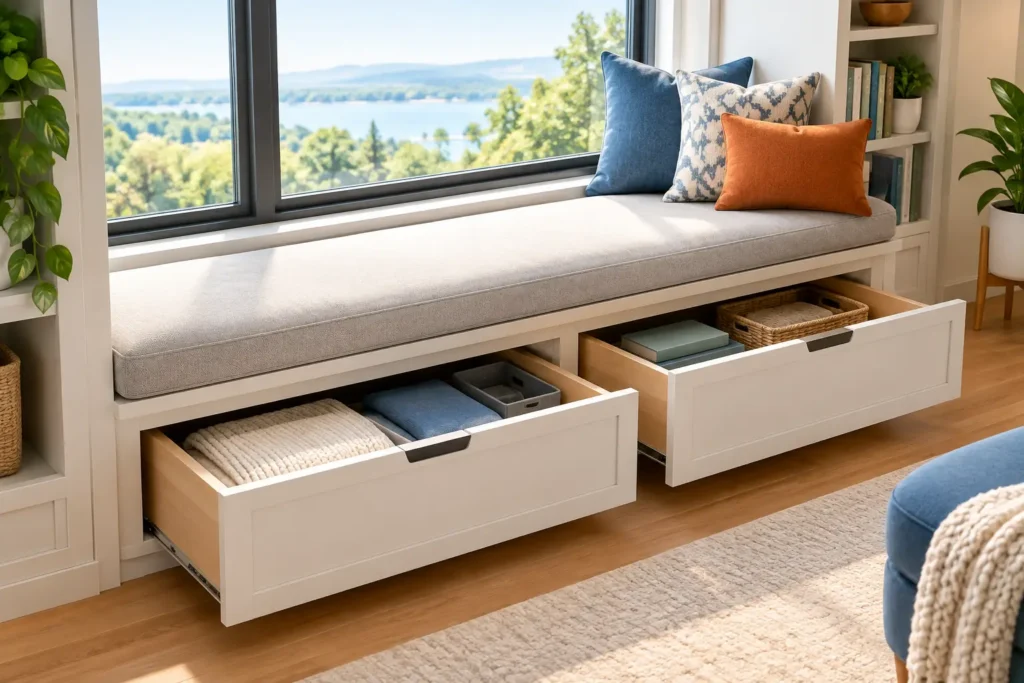
Drawers Below the Seat
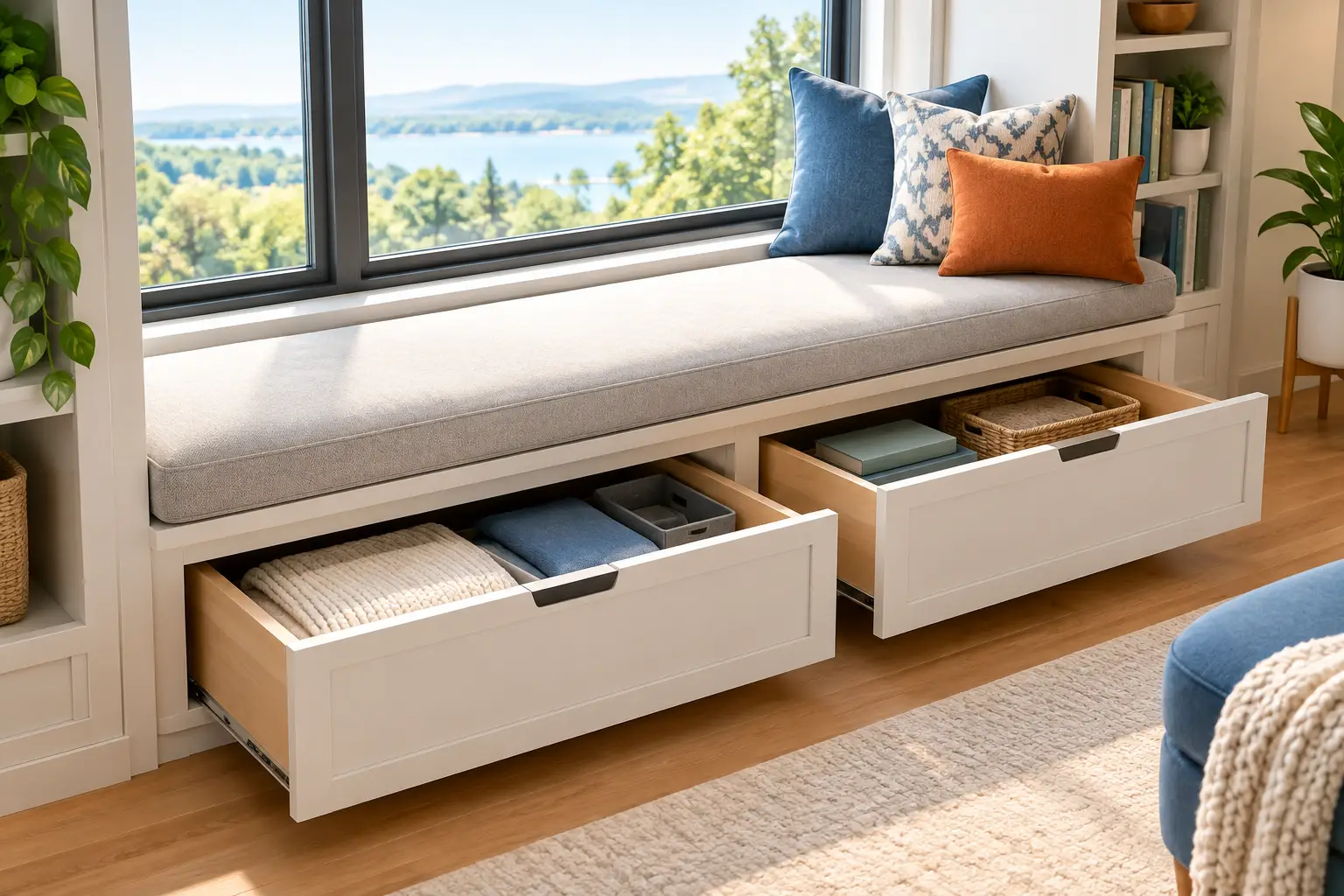
Drawers are a practical choice for frequently used items. They allow storage to be reached without disturbing the seat cushion, which can make a meaningful difference in a busy family room or kitchen nook. Drawers also create natural organization, especially when divided for smaller items.
They do require clearance in front of the bench. In a narrow hallway, tight breakfast area, or high-traffic passage, opening drawers may interfere with movement. Properly sized drawer fronts, durable slides, and precise alignment help the piece retain its refined appearance over years of use.
Cabinet Doors and Open Cubbies
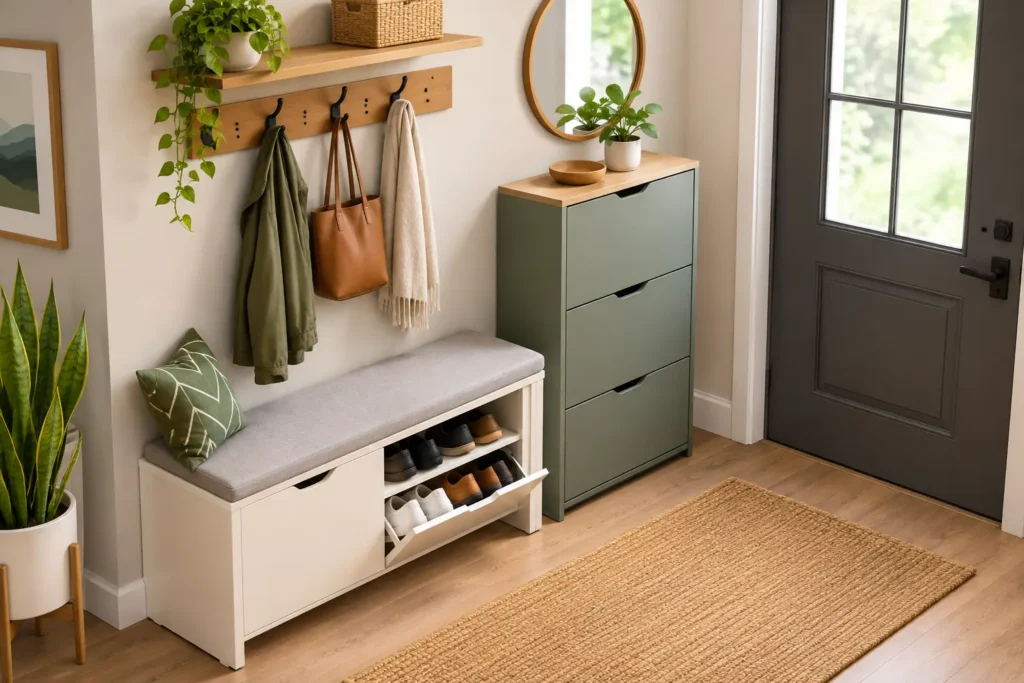
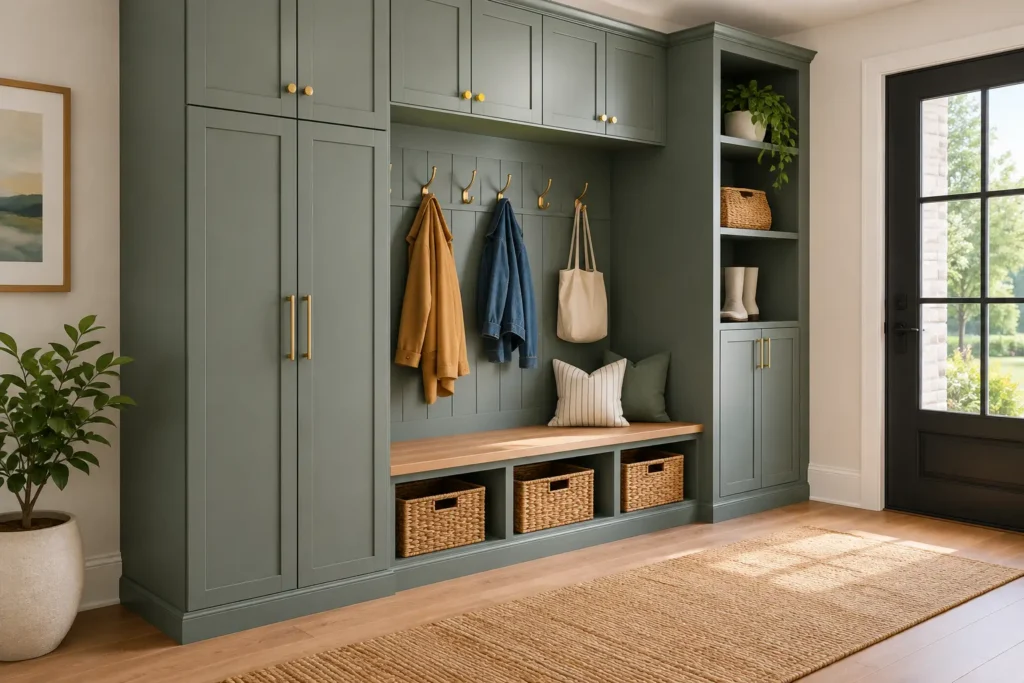
Cabinet doors can work well when the window seat is part of a larger wall of built-ins. They offer flexible compartment sizing and can visually relate to nearby cabinetry. Open cubbies, meanwhile, make sense for baskets, books, or shoes in a mudroom-style setting.
Open storage is convenient, but it asks more of the homeowner. If the goal is a serene, uncluttered room, enclosed storage is usually the more timeless choice. Cubbies can still be successful when baskets are sized intentionally and the surrounding millwork gives them a finished frame.
Proportion Makes the Difference
Comfort begins with scale. Most window seats are built at a height similar to standard chair seating, generally around 18 inches after allowing for a cushion. Depth often falls between 16 and 20 inches, though a deeper banquette may be appropriate where the room has space and lounging is the goal.
Those guidelines are a starting point, not a rule. A shallow alcove may call for a slimmer seat that functions as a perch, while a large bay window may support a generous bench with layered cushions. The key is to preserve comfortable circulation around the piece. A beautiful seat that crowds a doorway or interrupts a walkway will not serve the home well.
Window placement matters, too. The seat should relate thoughtfully to the sill height and trim profile. In some rooms, it makes sense for the bench top to meet the bottom of the window casing. In others, a small wall section between seat and window gives the composition better proportion. These details are subtle, but they determine whether the finished work appears integrated or improvised.
Materials and Details Built for Daily Use
A window seat is often one of the most touched surfaces in a room. Children climb onto it, guests lean against it, pets claim it, and homeowners use it as an everyday landing place. That is why material selection and installation standards matter as much as the design itself.
Cabinet-grade construction, stable substrates, durable joinery, and properly fitted hardware help prevent the looseness and misalignment that can make built-ins feel worn too soon. Painted finishes should be selected and applied for resilience, particularly in sunny window locations or high-use areas. If the project includes a stained wood seat, grain selection and finish consistency deserve equal attention.
The visible details should be tailored to the home. A simple recessed panel can complement traditional architecture. Flat drawer fronts and minimal trim may suit a more contemporary interior. Integrating the room’s baseboard profile, wall paneling, or existing cabinet style helps the seat feel built to last rather than added as an afterthought.
Plan Around Windows, Heat, and Light
Window seats require practical coordination before fabrication begins. Existing heating registers, baseboard heat, electrical outlets, window operation, and trim conditions all need to be reviewed. Blocking an air supply or making a window difficult to open is not a worthwhile trade for additional storage.
Where heating is located below a window, the solution may involve a properly designed grille, a vented toe kick, or a revised layout that maintains airflow. Local safety and egress considerations can also affect designs near bedroom windows. These are not details to solve after installation. They should be addressed during the consultation and measurement phase, when the full condition of the wall can be evaluated.
Natural light also shapes material decisions. A sunny seat is inviting, but repeated exposure can affect some finishes and fabrics over time. Choosing quality paint, a suitable upholstery fabric, and a cushion construction that holds its shape will protect the finished appearance.
A Custom Feature Should Belong to the Whole Home
The most successful window seats do not compete with the room. They bring together nearby elements: the window, trim, cabinetry, wall treatment, and color palette. In a home with detailed molding, the seat can echo that craftsmanship without becoming overly ornate. In a cleaner, modern setting, restrained lines and exact reveals can create the same sense of permanence.
This is where custom work offers a clear advantage over prefabricated storage benches. The dimensions can respond to the actual wall, not a catalog size. The finish can match surrounding millwork. The storage configuration can reflect the way the household lives. Small decisions, from drawer spacing to cushion overhang, are made in service of the complete room.
With more than 25 years of hands-on trade experience, DoMolding approaches these projects as lasting interior improvements, not temporary storage solutions. Careful measurement, tailored design, and precise installation give a window seat the polished presence of true architectural millwork.
A well-crafted window seat should make a room feel easier to live in from the first day. When its storage, proportions, and finish are planned with care, it becomes a quiet but valuable part of the home: a place to pause by the window, put daily clutter away, and enjoy craftsmanship that continues to serve the space for years.