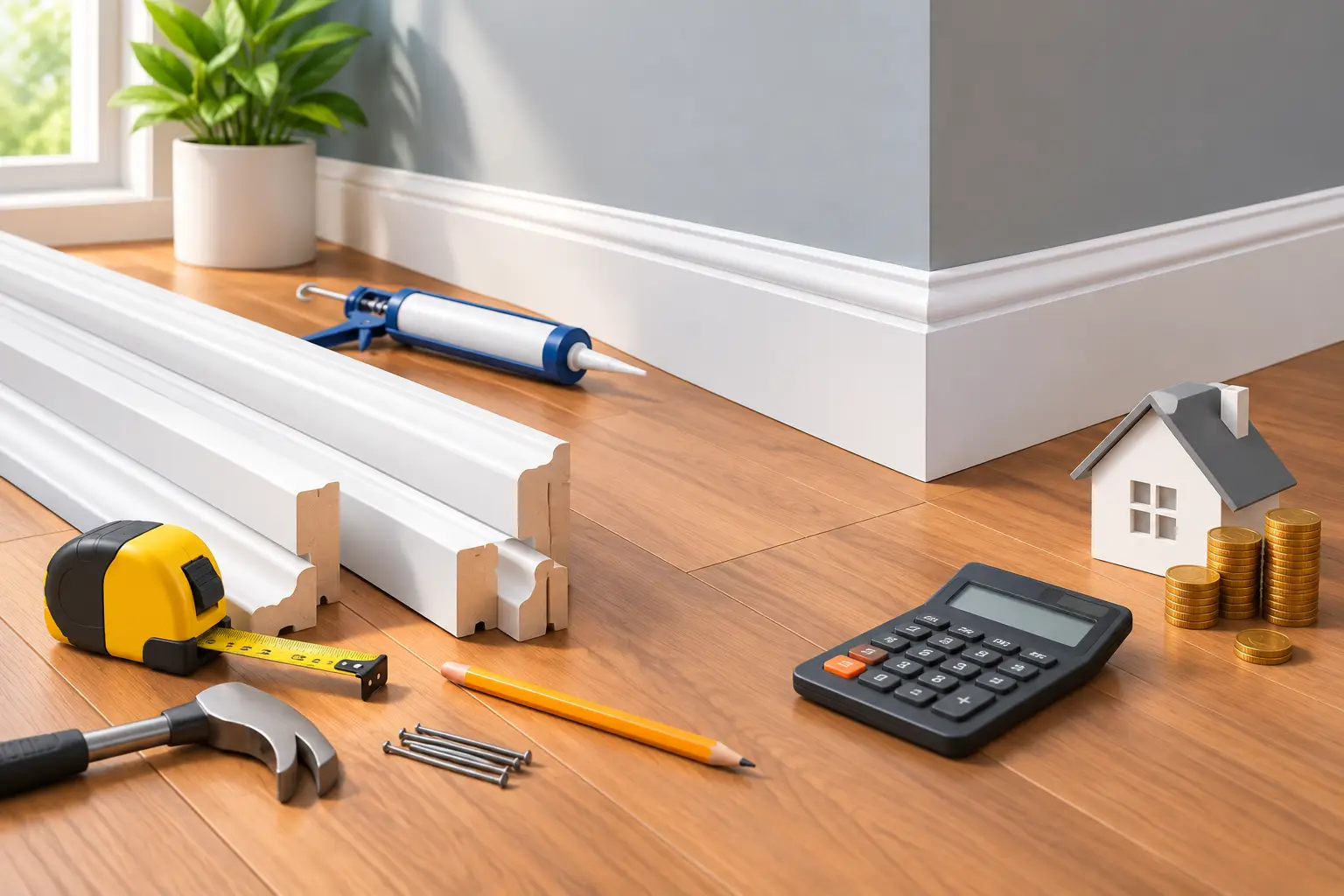
A room can have beautiful flooring, fresh paint, and carefully chosen furnishings, yet still feel unfinished when the baseboards are undersized, worn, or poorly fitted. Baseboard molding installation cost is therefore about more than a linear-foot price. It reflects the material, the condition of the room, the level of finish work required, and the care needed to create a clean, lasting transition between wall and floor.
For Central New Jersey homeowners, professionally installed baseboards are often a focused improvement with an outsized visual return. The right profile can make ceilings feel taller, give walls more architectural presence, and connect updated spaces to the existing character of the home.
What Does Baseboard Molding Installation Cost?
Most baseboard projects are priced by linear foot, although a contractor may provide a room-by-room or whole-project proposal when the layout includes several details, repairs, or custom selections. For a straightforward installation using a common painted profile, homeowners may see installed pricing in the range of roughly $6 to $15 per linear foot. More detailed profiles, premium materials, substantial prep work, and custom finish carpentry can raise the investment to $15 to $30 or more per linear foot.
A single bedroom may cost several hundred dollars, while replacing baseboards throughout a main level or an entire home can range from the low thousands to considerably more. These figures are useful for early planning, not a substitute for an on-site assessment. A room with open walls and square corners is fundamentally different from an older home with uneven plaster, built-ins, radiator covers, or multiple doorways.
The price should also be considered alongside the scale of the molding. A narrow builder-grade baseboard may be less expensive initially, but it can look undersized in a home with nine-foot ceilings, wide door casings, or refined wall paneling. A proportioned, durable selection offers a more cohesive result for years to come.
The Factors Behind Baseboard Molding Installation Cost
Material is only one part of the proposal. Quality installation requires careful measuring, clean cuts, secure fastening, caulking, filling, and thoughtful transitions at doors, stairs, and adjacent trim. The details that are easiest to overlook are often what separate an acceptable result from finished millwork that feels tailored to the house.
Material and profile selection
Primed MDF is a popular choice for painted interiors because it provides a smooth, consistent surface and is generally cost-effective. It performs well in many dry living spaces, but it needs proper installation and should be selected thoughtfully near areas with recurring moisture exposure.
Finger-jointed pine and other paint-grade wood options can provide strength and flexibility for certain applications. Solid hardwood is usually selected when a stained or natural wood finish is desired, and it carries a higher material cost. Hardwood also requires more care in matching grain, color, and finish.
The profile matters as much as the material. A simple 3 1/4-inch colonial baseboard is quicker and less costly to install than a taller built-up design with a base cap, shoe molding, or custom milled detail. Neither approach is automatically better. The right choice depends on the room’s proportions, the door casing, the flooring, and the architectural language already present in the home.
Room shape and access
Linear footage is a starting point, not the entire scope. A rectangular room with few interruptions moves efficiently. Hallways, stair landings, bay windows, angled walls, fireplaces, cabinetry, and closely spaced doors add cutting, fitting, and finishing time.
Furniture removal and access can affect labor as well. Empty rooms are the simplest conditions for installation. If a project is part of a larger renovation, installing baseboards after flooring and wall work are complete can help avoid unnecessary rework and protect the final finish.
Removal and wall preparation
Replacing old baseboards may involve careful demolition, disposal, and repairs behind the existing trim. Paint can tear away from drywall, walls may have gaps at the floor line, and older flooring can reveal irregularities once the original molding is removed.
A professional proposal should account for this possibility. Minor filling and caulking are part of a proper finish, while extensive drywall repair, water damage, or floor correction may need to be addressed separately. Clear expectations before work begins prevent a modest trim project from becoming an unwelcome surprise.
Finish requirements
Some clients prefer molding that is installed, filled, caulked, and ready for a painter. Others want a complete finished result, including priming and final paint. The latter requires additional preparation and protection of nearby floors and walls, but it creates a more complete, professionally coordinated outcome.
Stained wood is more exacting than painted trim. Nail placement, grain direction, joints, and color consistency remain visible, so craftsmanship and finishing standards carry greater weight in the final cost.
Why Labor Is Worth Evaluating Carefully
Baseboards are one of the most visible finish elements in a room. Long joints, outside corners, and transitions where baseboards meet door casings can expose rushed work immediately. Large gaps filled with excessive caulk, poorly aligned returns, and uneven top edges tend to become more noticeable over time, not less.
Experienced finish carpentry focuses on the fit before the caulk. Inside corners are typically coped or precisely mitered based on the profile and wall conditions. Outside corners must be clean and durable. Baseboards should sit consistently against the wall while accommodating the natural variations found in real homes.
This is particularly relevant in older Central New Jersey properties, where walls and floors are rarely perfectly straight. A skilled installer does not assume every corner is square. The work is adjusted with care so the finished lines appear intentional, balanced, and refined.
How to Build a More Accurate Budget
Before requesting estimates, measure the approximate perimeter of each room and note the details that change the scope. Doorways, closets, fireplaces, built-ins, radiators, stairs, and existing trim all matter. It is also helpful to identify whether flooring is staying in place, being replaced, or still under consideration.
When comparing proposals, confirm what is included rather than focusing only on the lowest per-foot figure. A complete scope may include material, delivery, removal of existing baseboards, installation, fastening, coping and mitering, caulking, nail filling, cleanup, and paint preparation. If painting is included, clarify the number of coats and whether touch-up work on adjacent walls is part of the service.
Ask whether the molding profile is readily available or custom sourced. A distinctive profile may be the right design decision when matching original trim or creating a more substantial look, but it can require longer lead times and increase material costs. That trade-off is often worthwhile in visible main areas, while a simpler coordinating profile may make sense in secondary rooms.
When Custom Baseboards Make Sense
Custom baseboard work is most valuable when the home needs a cohesive architectural plan rather than a one-size-fits-all replacement. Taller ceilings can support taller trim. Formal rooms may benefit from a built-up profile that relates to crown molding and casings. Contemporary interiors can call for clean, squared-off lines with minimal ornament.
It also makes sense to consider baseboards as part of a larger interior improvement. New cabinetry, wall paneling, closet systems, or refinished floors can look disconnected if the surrounding trim remains underscaled or inconsistent. Coordinating these elements creates continuity without making the home feel overly decorated.
DoMolding approaches trim as a permanent architectural detail, not an afterthought. With more than 25 years of hands-on experience, the focus is on selections and installation methods that suit the space, hold up to daily life, and contribute to a timeless interior.
A Better Starting Point Than a Per-Foot Price
A per-linear-foot estimate is useful, but the better question is what the finished room should accomplish. If the goal is simply to replace damaged molding before a sale, an economical painted profile may be appropriate. If the goal is to elevate a long-term home, proportion, material quality, and precise installation deserve more consideration.
The most successful baseboard project begins with the room as it exists: its ceiling height, flooring, door trim, wall condition, and intended use. From there, a carefully selected profile and a clean installation can bring quiet order to the entire space – the kind of detail that makes a home feel considered every day.