A living room can have beautiful furnishings and still feel unfinished when its walls are left without architectural definition. The right living room wall paneling ideas give the room a sense of proportion, permanence, and intention – turning a broad, blank surface into a refined part of the home’s design. The key is not choosing the most elaborate pattern. It is selecting paneling that suits the room’s scale, natural light, existing trim, and the way your family uses the space.
For homeowners investing in a lasting interior upgrade, wall paneling should feel integrated rather than applied. Careful layout, durable materials, crisp reveals, and precise installation make the difference between a decorative trend and millwork that continues to look right years from now.
Start With the Room’s Architecture
Before choosing a panel style, consider what the living room already has to say. Ceiling height, window placement, fireplace location, door casing, baseboards, and adjacent rooms all influence the right approach. A formal living room with substantial crown molding can support more detailed box molding. A casual great room with clean-lined cabinetry may call for a simpler vertical pattern or a quiet grid.
Paneling should also establish visual balance. In a room with a large television, fireplace, or wide sectional, the wall treatment can organize the elevation and reduce the sense that one object is carrying all the visual weight. In a smaller room, overly busy paneling can make the walls feel closer. The best design often uses fewer, better-proportioned elements.
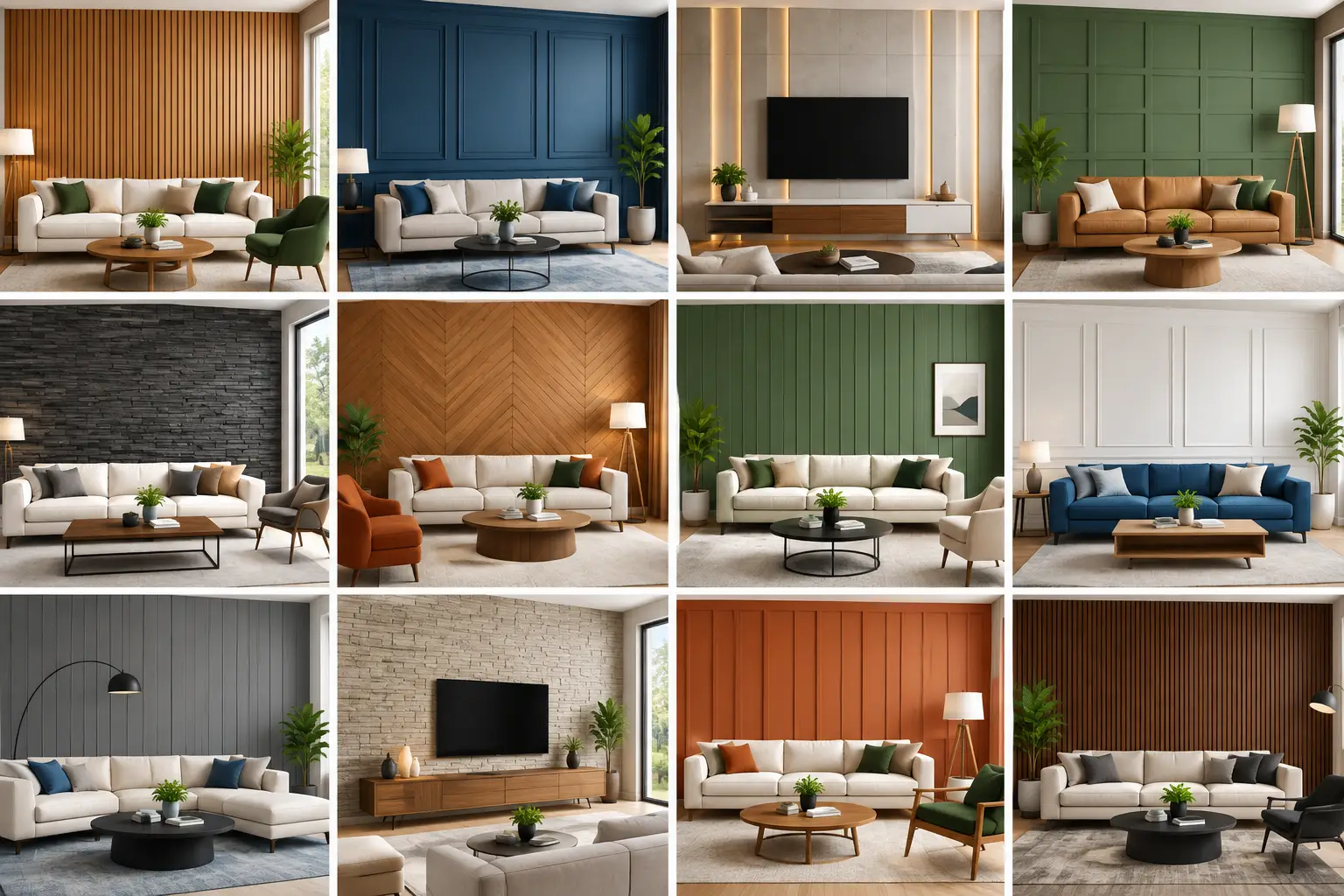
12 Living Room Wall Paneling Ideas for a Tailored Finish
1. Full-Height Picture Frame Molding
Picture frame molding uses applied trim to create rectangular wall panels. It is one of the most versatile choices for traditional, transitional, and updated colonial homes throughout Central New Jersey. Full-height frames bring formality and rhythm to a living room without requiring a heavily ornate profile.
The proportions matter more than the number of boxes. Wide walls benefit from larger panels with consistent spacing, while narrow returns may need fewer frames or a simplified layout. Painting the molding and wall the same color creates a quiet, architectural effect; using a subtle contrast makes the pattern more pronounced.
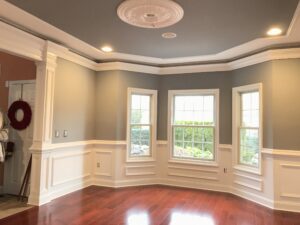
2. Wainscoting With a Refined Chair Rail
Lower-wall paneling adds character while protecting high-contact surfaces from chairs, children, and everyday activity. In a living room, wainscoting generally works best at a height that relates to nearby windowsills, mantel details, or existing architectural lines rather than following a fixed rule.
A taller wainscot can make a room feel more tailored, particularly in spaces with higher ceilings. A shorter treatment is often better in compact rooms, where it provides detail without visually dividing the wall too aggressively. Pair it with a durable satin or semi-gloss finish for practical maintenance.
3. Board and Batten for Clean Vertical Structure
Board and batten creates a series of vertical battens over a smooth wall surface, often capped with a horizontal rail. Its clean geometry fits modern farmhouse interiors, but with narrow battens, thoughtful spacing, and restrained color, it also works beautifully in contemporary and transitional homes.
This approach can be especially effective on a wall behind a sofa or in a living room that needs more height. Vertical lines naturally draw the eye upward. However, battens that are too widely spaced or too heavy for the room can feel generic, so the layout should be designed around the wall’s actual dimensions rather than copied from a standard pattern.
4. Shiplap Used With Restraint
Horizontal shiplap can lend warmth and texture to a fireplace wall, a small sitting area, or a coastal-inspired living room. It is most successful when it has a clear purpose. Cladding every wall may compete with flooring, cabinetry, and other finishes, while one carefully selected feature wall can add depth without overwhelming the room.
For a more timeless result, choose finely proportioned boards and a clean painted finish. Avoid overly distressed treatments if the goal is a polished interior that can evolve with future furnishings.
5. Vertical Paneling for Height and Simplicity
Vertical tongue-and-groove boards, V-groove paneling, or narrow slatted layouts bring a calm, tailored rhythm to the room. They are particularly useful in living rooms with low or standard-height ceilings because the eye follows the vertical direction.
A painted vertical treatment can be subtle and durable. Stained wood creates a richer focal point but requires careful coordination with floors, beams, and furniture. The wood tone should feel intentional, not like an unrelated accent introduced late in the design process.
6. A Paneled Fireplace Wall
A fireplace wall is often the natural focal point of the living room, which makes it an ideal place for architectural paneling. Symmetrical picture frames can frame a mantel. Vertical boards can give a tall fireplace elevation greater presence. Flat panels can conceal access points or integrate built-ins with a more cohesive appearance.
The trade-off is complexity. Fireplace walls often include stone, tile, televisions, vents, outlets, and varying depths. A precise field measure and coordinated plan are essential so panel joints, trim lines, and mounting locations remain balanced.
7. Recessed Flat Panels for Formal Rooms
Recessed paneling has depth built into the wall assembly, creating a more traditional and substantial result than surface-applied molding. It is well suited to formal living rooms, libraries, and homes with established architectural character.
Because this work involves more construction detail, it is typically a larger investment. The reward is a finish with genuine dimension and permanence. When aligned with doors, windows, and built-in cabinetry, recessed panels can make a room feel as though it was designed that way from the beginning.
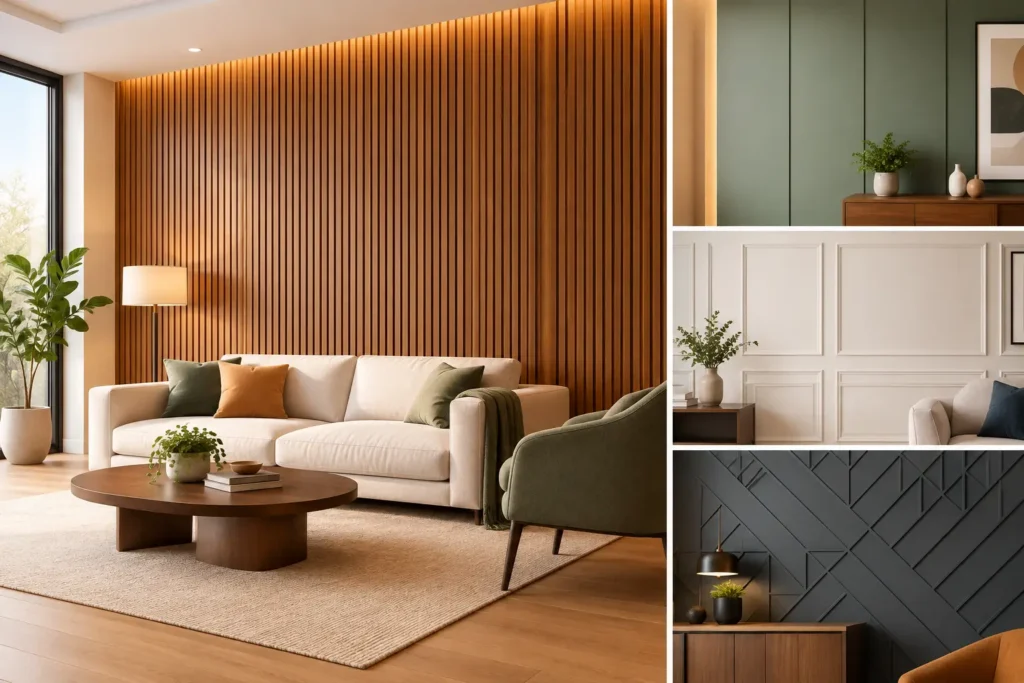
8. Slatted Wood Accent Walls
Wood slats offer a contemporary option for homeowners who want texture without elaborate molding. Installed vertically, they can create a warm backdrop behind seating, define a conversation area, or add interest to a media wall.
This is not a one-size-fits-all solution. Slat width, spacing, backing color, and wood species each change the final effect. A dense, dark installation can absorb light in a small room, while lighter wood and measured spacing can keep the wall feeling open.
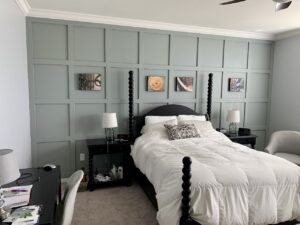
9. Square Grid Paneling
A square or rectangular grid gives a living room a composed, orderly appearance. It is especially effective in transitional interiors where the goal is tailored detail without overt traditional ornament. The pattern can span a full wall or sit above a simple wainscot.
Grid paneling needs disciplined alignment. Openings, outlets, artwork, and furniture placement should be considered before the first piece is installed. A grid that ends awkwardly at a doorway or leaves a narrow, unplanned section at the edge of a wall will diminish an otherwise refined result.
10. Wall Paneling Integrated With Built-Ins
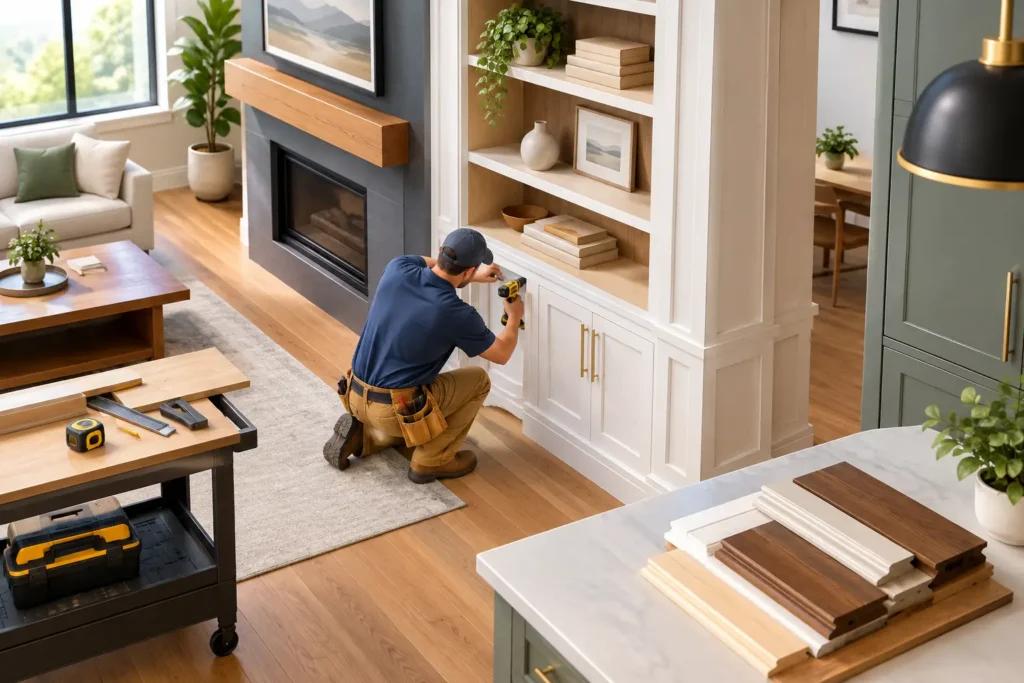
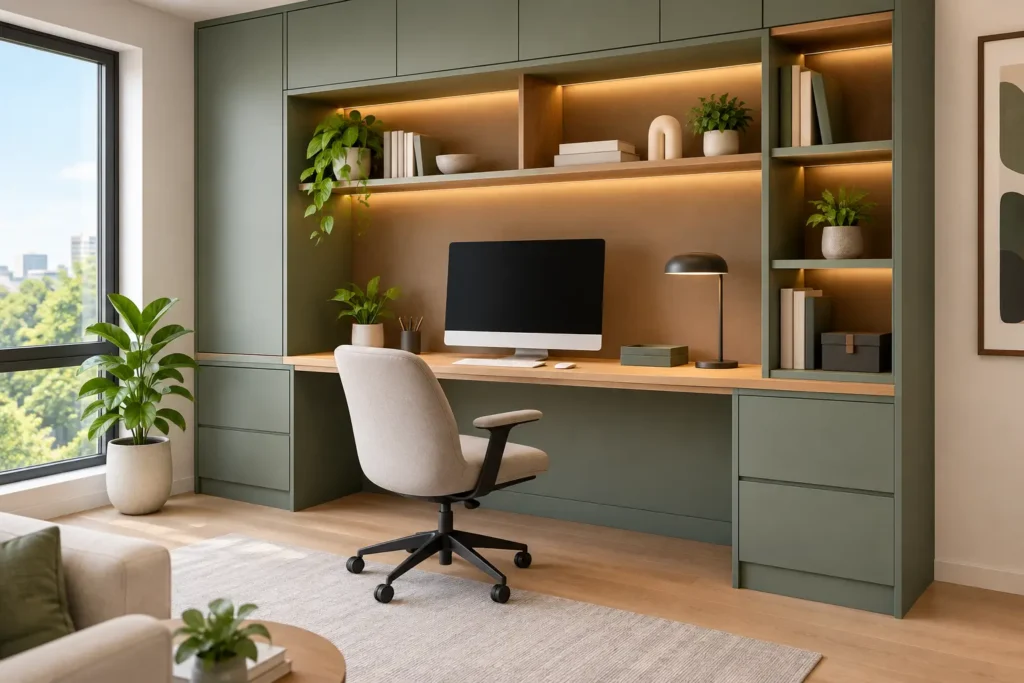
When a living room includes bookcases, base cabinets, a window seat, or a media center, paneling can connect those elements into one architectural composition. Matching profiles and consistent reveal lines help the built-ins feel intentional instead of separate pieces placed along the same wall.
This approach is highly functional as well as visually strong. Storage can be tailored around books, games, electronics, or display items while the paneling provides a finished backdrop. It is often the best choice for rooms that need both stronger character and better organization.
11. Two-Tone Paneling for Gentle Contrast
Painting the lower paneling a deeper color than the upper wall can add depth and grounding to a living room. Deep green, warm charcoal, muted blue, and soft taupe are often more enduring choices than highly saturated shades. The contrast should complement the room’s natural light and upholstery rather than compete with them.
For a quieter look, paint all paneling and walls in one color but use different sheens. The low-contrast approach allows craftsmanship and shadow lines to do the work.
12. Paneling That Frames Art Instead of Replacing It
Wall paneling does not have to become the entire focal point. Well-proportioned frames can create natural locations for art, mirrors, or sconces, giving each piece a sense of place. This is particularly valuable in living rooms where homeowners want architectural character but also collect meaningful artwork.
Leave adequate breathing room. Paneling should support the art, not force every wall into a rigid display system. A professional layout considers likely furniture placement and viewing height before finalizing the design.
Details That Make Paneling Feel Built to Last
The durability of wall paneling depends on more than the visible profile. Stable materials, properly prepared walls, secure fastening, clean caulk lines, and a finish appropriate for the room all matter. Seasonal movement, uneven plaster, and existing trim conditions should be addressed during planning, not hidden with quick fixes.
Transitions deserve equal attention. Baseboards, crown molding, door casings, and window trim should relate to the new paneling in scale and profile. Sometimes existing trim can be incorporated; other times, updating it is the better path to a cohesive result. This is where tailored finish carpentry delivers value that pre-sized decorative kits cannot match.
Choose a Design That Belongs in Your Home
The strongest wall paneling is rarely the loudest. It gives a living room proportion, depth, and a finished sense of character while allowing furnishings, light, and daily life to remain at the center. For a lasting result, begin with the room you have, choose a pattern with purpose, and rely on careful craftsmanship to bring every line into balance.
DoMolding approaches decorative architectural wall paneling as a permanent improvement, shaped around each home’s layout and style. A thoughtful consultation can turn an initial inspiration image into a tailored plan with the proportions, materials, and installation quality your living room deserves.