A painted kitchen can look newly tailored without replacing well-built cabinetry, but kitchen cabinet paint durability is decided long before the final coat dries. Cabinet doors live at hand level, beside heat and moisture, and within reach of cooking oils, cleaners, pets, and daily traffic. A beautiful color matters, but the preparation, coating system, materials beneath it, and installation details determine whether that color still looks refined years from now.
For Central New Jersey homeowners investing in a lasting kitchen update, the goal is not simply a fresh finish. It is a surface that suits the way the kitchen is used while preserving the clean lines and architectural character of the home.
What Kitchen Cabinet Paint Durability Really Means
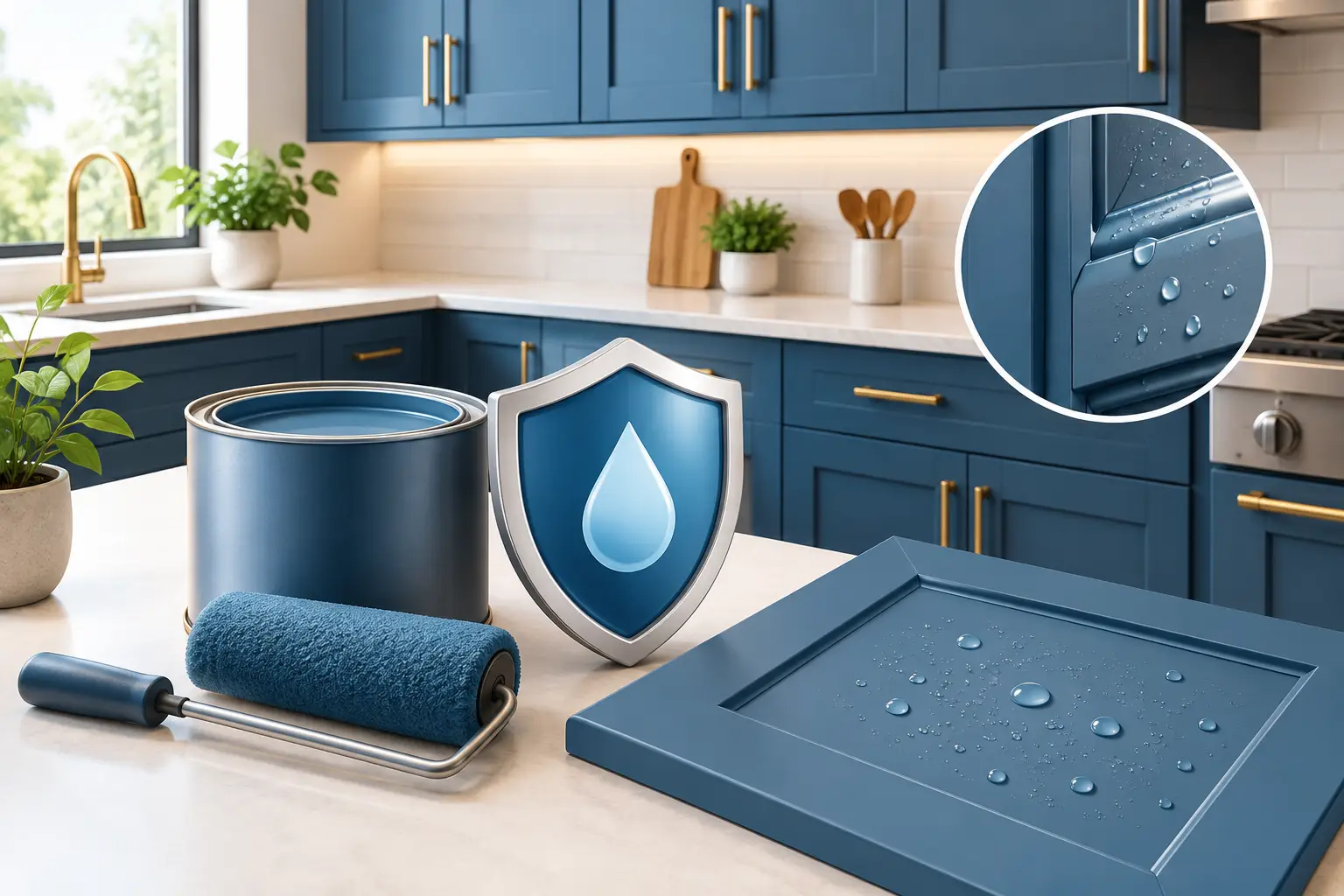
Durable cabinet paint does not mean a finish that can never show wear. Any painted surface can be damaged by a sharp impact, standing water, or repeated abrasion. Durability means the finish resists the normal conditions of a working kitchen: fingerprints around pulls, occasional drips near the sink, steam from the range, and regular cleaning.
A quality finish should adhere firmly to the cabinet surface, remain consistent in color and sheen, and resist chipping at edges and corners. It should also cure hard enough that doors and drawers do not stick together or develop marks from ordinary use. These qualities come from a complete process, not a single premium can of paint.
The expected performance also depends on the cabinetry itself. Solid wood, furniture-grade plywood, MDF, and laminate each respond differently to moisture, movement, sanding, and primers. An experienced refinishing plan accounts for those differences rather than applying the same approach to every kitchen.
The Finish Is Only as Strong as the Preparation
Most early paint failures begin below the visible surface. Kitchen cabinets collect oils, residue, polish, and airborne grease, including cabinets that appear clean. If those contaminants remain, paint may initially look smooth but eventually release, scratch, or peel around frequently touched areas.
Careful cleaning and degreasing create the necessary starting point. The existing finish must then be evaluated for adhesion, damage, and compatibility with the intended coating. Sound surfaces may be cleaned, scuff-sanded, and primed. Failing coatings, swollen areas, loose veneer, open joints, and deep dents require repair before refinishing can begin.
Sanding is not merely a cosmetic step. It creates an even profile for adhesion and helps remove small imperfections that become more noticeable under a new painted finish. Door profiles, routed edges, rails, and narrow details need particular attention. Rushing these areas can leave inconsistent texture or weak points where paint wears first.
Repairs Protect the Finish From Within
Paint cannot stabilize a cabinet door that is moving, separating, or absorbing moisture. Loose hinges, misaligned doors, damaged drawer fronts, and exposed raw edges should be addressed before finishing. A door that rubs against an adjacent cabinet every time it closes will eventually lose paint, regardless of coating quality.
This is one reason custom interior craftsmanship brings value to a refinishing project. The finish and the function need to be considered together. Proper adjustments, repairs, and reinstallation protect the visual result after the work is complete.
Choosing the Right Paint System for Cabinets
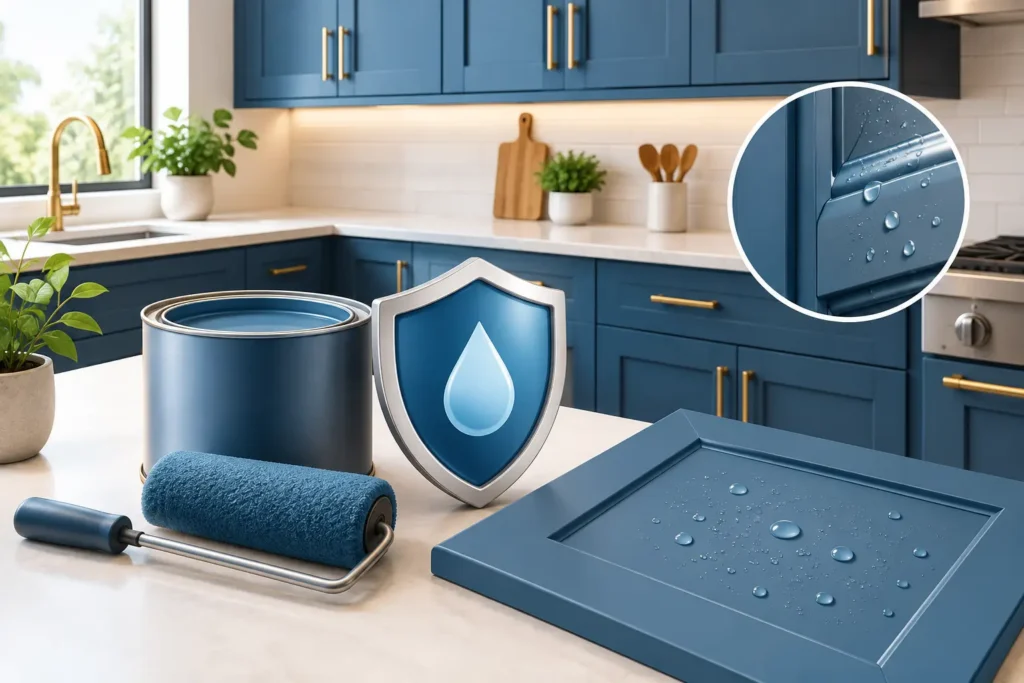
Wall paint is designed for walls. Cabinet paint must handle repeated contact, cleaning, and impact on a far more demanding surface. A professional-grade cabinet coating system typically combines a compatible primer with a durable finish coat selected for adhesion, hardness, and appearance.
The best choice depends on the substrate and the desired look. Some waterborne coatings provide excellent durability with lower odor and a cleaner application environment. Other systems may be selected for a specific material, existing finish, or performance requirement. The right product is less about a label that promises toughness and more about using compatible layers applied at the proper thickness.
Sheen also affects long-term appearance. Higher sheens can be easier to wipe clean and may offer a crisp, furniture-like look, but they reveal surface imperfections and touch-up differences more readily. Lower sheens soften visual flaws but may show marks in high-contact areas. Satin and semi-gloss are often practical choices for painted cabinetry, though the ideal sheen should reflect the home’s light, design direction, and household habits.
Color Influences Visible Wear
Color does not change the chemical strength of paint, but it does change how use is perceived. Very dark cabinets can show dust, smudges, and fine scratches. Bright white doors can reveal food splatter, grime near pulls, and yellowing if an unsuitable product is used. Mid-tones and layered neutrals often disguise minor daily evidence of use more easily while still delivering a polished, timeless result.
That does not mean homeowners should avoid bold colors or crisp white kitchens. It means the finish plan should be realistic about maintenance, lighting, and the level of visual perfection expected over time.
Application Conditions Matter More Than They Seem
A cabinet finish needs controlled conditions to level properly and cure as intended. Temperature, humidity, dust, ventilation, and drying time all affect the final result. In a humid New Jersey summer or a tightly heated winter home, those conditions require close attention.
Applying heavy coats to save time can create problems such as poor curing, uneven sheen, sagging, or a surface that remains vulnerable to impressions. Multiple properly applied coats are usually more reliable than one thick application. Allowing sufficient dry and cure time between stages is equally important.
Cabinet doors and drawer fronts are often best finished with careful attention to all edges and profiles, not simply coated in place. This creates a more consistent appearance and allows a cleaner result around hardware, hinges, and detailed millwork. It also makes it easier to identify and correct small flaws before the components return to the kitchen.
Daily Habits That Preserve Painted Cabinets
Even a professionally finished kitchen benefits from sensible care. Use a soft, damp cloth with a mild cleaner for everyday cleaning, then dry the surface rather than allowing moisture to remain at seams and edges. Avoid abrasive pads, harsh powders, strong solvents, and aggressive degreasers unless the coating manufacturer specifically approves them.
Pay attention to the areas that receive repeated contact. Pulls and knobs reduce the need to touch painted door faces, while soft-close hardware helps limit impact. Use the exhaust hood while cooking, especially with high-heat frying, and wipe splatters promptly. Near the sink and dishwasher, check occasionally for leaking plumbing or steam exposure that can reach unfinished edges and cabinet joints.
Small chips should not be ignored for years. A timely, well-matched touch-up can protect the substrate from moisture and keep a minor mark from becoming a larger repair. However, touch-ups are rarely invisible on every sheen and color. A skilled professional can advise whether a local repair will blend appropriately or whether refinishing a component is the better choice.
When Repainting Is the Right Investment
Repainting is an excellent option when cabinet boxes are sound, doors are well constructed, and the kitchen layout still supports the household’s needs. It can preserve quality materials while updating a dated stain, uneven color, or worn finish. It is especially effective when paired with tailored details such as new hardware, improved storage, architectural trim, or modifications that make the cabinetry feel intentional within the room.
There are limits. Cabinets with extensive water damage, failing particleboard, severely peeling thermofoil, or poor original construction may not justify a finish-only solution. Likewise, a homeowner seeking major layout changes, deeper storage, or a new door style may be better served by custom cabinetry or selective replacement. An honest evaluation protects both the budget and the long-term result.
A Lasting Finish Begins With an Honest Assessment
Kitchen cabinet paint durability is not a matter of choosing the hardest-sounding product. It is the result of sound cabinetry, disciplined preparation, compatible materials, controlled application, and thoughtful care. At DoMolding, each refinishing conversation begins with the details that affect how a kitchen will perform and feel in daily life.
A painted finish should make the room feel more refined, not more fragile. When the work respects the existing cabinetry and the way your home is used, the result can remain clean, durable, and distinctly yours for years to come.