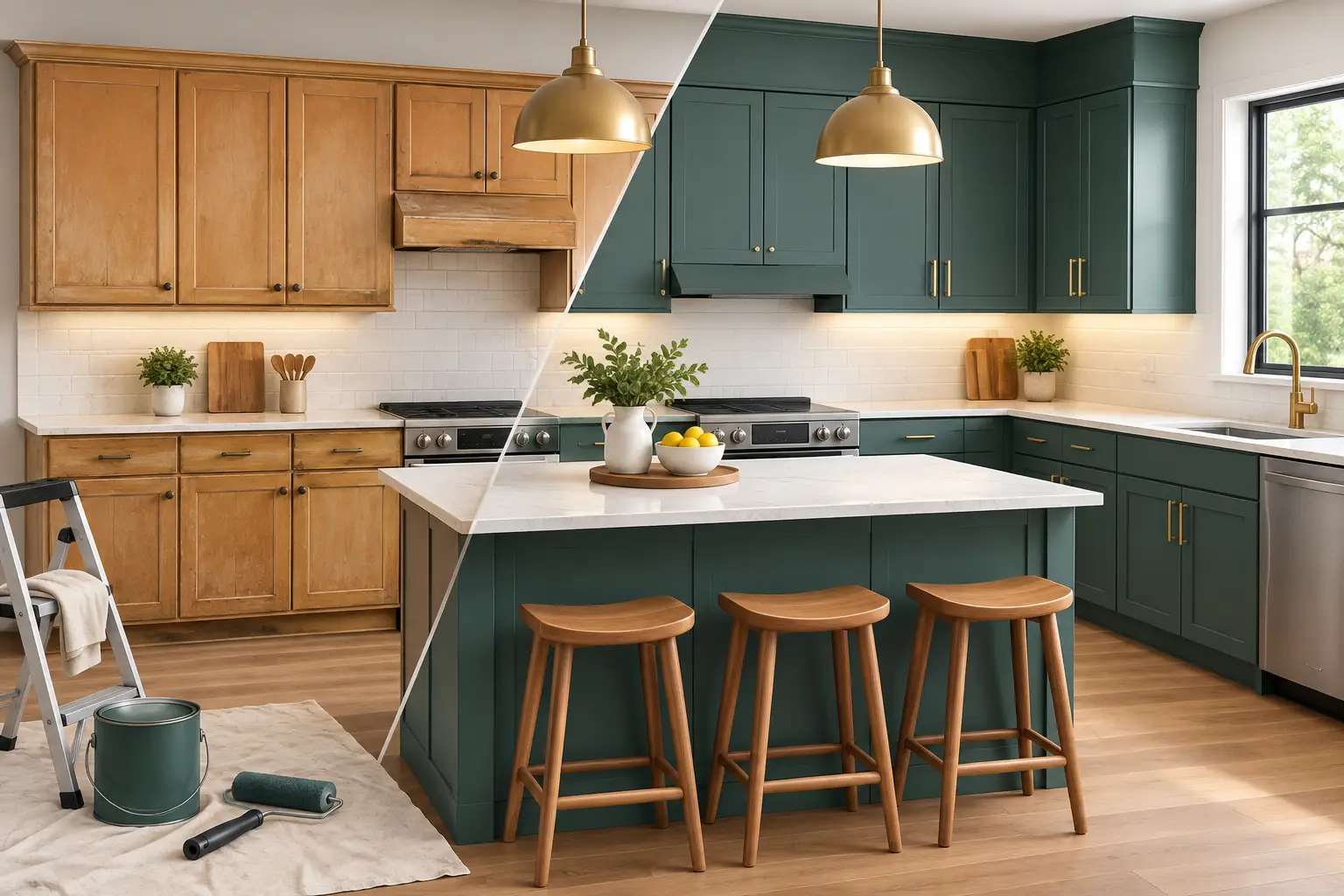
A kitchen can feel dated long before its cabinets have reached the end of their useful life. When the layout works, storage is sufficient, and the cabinet boxes are structurally sound, kitchen cabinet refinishing can deliver a dramatic change without the waste, cost, and disruption of a full replacement. The result is not simply a new color. Done properly, it is a renewed finish system that brings the room back into balance with the rest of the home.
For homeowners in Central New Jersey, the best decision often comes down to an honest assessment of what is worth preserving. Well-built cabinetry can provide an excellent foundation for a refined kitchen update. The key is knowing where refinishing makes sense, what level of preparation the work requires, and how to select a finish that will continue to look right years from now.
When Kitchen Cabinet Refinishing Is the Right Choice
Refinishing is most effective when the cabinets themselves are well constructed. Solid wood doors, quality veneer panels, and stable cabinet boxes can often be renewed with excellent results. Existing cabinets may have worn clear coats, yellowed paint, dated stains, minor surface scratches, or a color that no longer fits the home. Those are finish problems, not necessarily cabinet problems.
It is also a practical option when a homeowner wants to preserve a functional kitchen layout. Moving plumbing, electrical connections, flooring, countertops, and appliances can quickly expand the scope of a renovation. If the work triangle is efficient and the cabinetry serves the household well, a tailored refinishing project can focus the investment where it is most visible.
That said, refinishing is not a cure for every condition. Cabinet boxes with water damage, delamination, structural movement, failing hinges, or undersized storage may require repair, modification, or replacement. Thermofoil doors that are peeling extensively can be particularly difficult to restore to a durable standard. A careful consultation should identify these limitations before any color or finish decisions are made.
Refinishing, Repainting, and Refacing Are Not the Same
These terms are often used interchangeably, but they describe different levels of work. Repainting generally refers to applying a new coating over prepared surfaces. It can be part of a refinishing project, especially for previously painted cabinetry, but paint alone does not define the quality of the result.
Kitchen cabinet refinishing involves preparing the existing surface, correcting imperfections, addressing adhesion concerns, and applying a finish system suited to the material and the intended look. Stained wood cabinets may be cleaned, repaired, sanded, toned, and protected with a new clear finish. Painted cabinets may require more extensive surface preparation, priming, and a durable topcoat designed for daily use.
Refacing is a more substantial update. It typically involves covering cabinet boxes with new material and replacing doors and drawer fronts. It can be valuable when the cabinet structure is worth keeping but the exterior style needs a complete change. It is generally more expensive than refinishing and may be unnecessary if the existing door profiles and construction remain appropriate for the home.
The right path depends on the cabinet material, its condition, the desired design shift, and the level of permanence expected from the project.
The Preparation Behind a Durable Finish
The visible finish is only as reliable as the work beneath it. Kitchen cabinets are exposed to heat, moisture, cooking residue, hand oils, and repeated opening and closing. A finish that looks acceptable on day one can chip, peel, or wear prematurely if the surfaces were not properly prepared.
A professional process begins with evaluating each component. Doors and drawer fronts are removed and labeled so they can return to the correct locations. Hardware is removed or protected. Cabinet frames, panels, and exposed ends are inspected for dents, loose joints, worn edges, and prior coating failure.
Cleaning is a critical first step. Kitchens collect residues that can interfere with adhesion, even when the cabinets appear clean. After appropriate cleaning, surfaces are lightly sanded or otherwise prepared to create a stable bond. Open grain, damaged corners, old hardware holes, and small imperfections may need filling and repair before priming or finishing begins.
The coating system should match the substrate. Wood, veneer, MDF, and previously painted surfaces each respond differently. The correct primer and topcoat help create even color, controlled sheen, and a harder-wearing surface. This is where a quick cosmetic update and a finish built to last begin to separate.
Choosing a Color That Belongs in the Home
White cabinetry remains popular because it brightens a kitchen and works across many architectural styles. Yet the specific white matters. A bright, cool white can feel crisp against contemporary materials, while a softer white or warm neutral may better suit traditional trim, natural stone, and older homes with established architectural character.
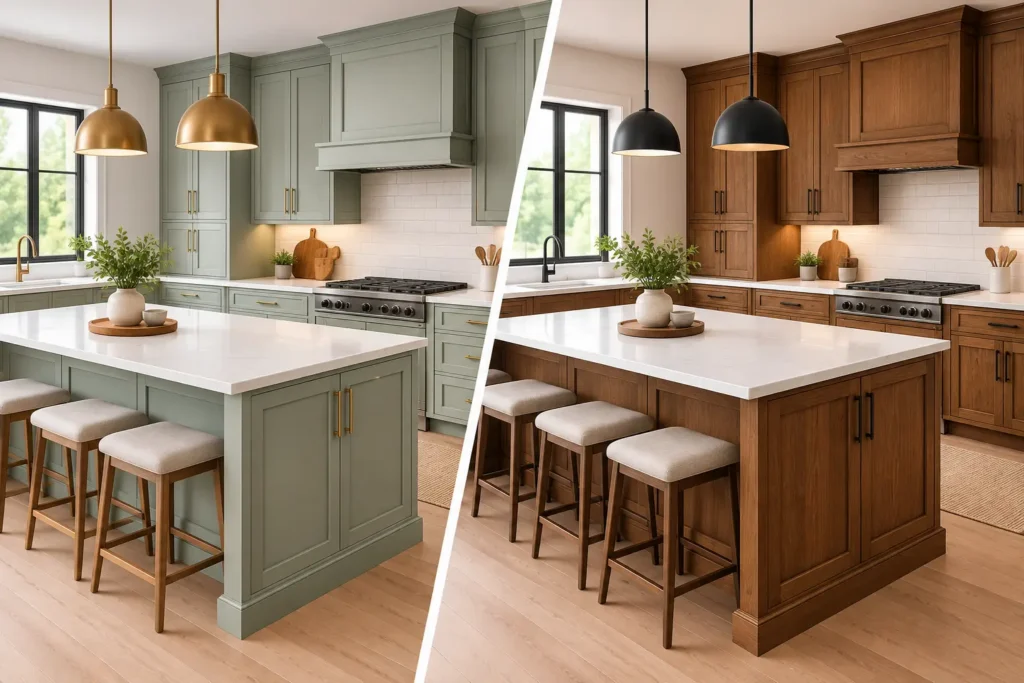
Muted greens, blue-grays, charcoal, mushroom tones, and deep navy can also bring definition to an island or a lower cabinet run. These choices are most successful when they relate to adjacent rooms, flooring, countertops, and permanent details such as millwork or fireplace surrounds. A cabinet color should not feel isolated from the rest of the interior.
Sheen deserves the same consideration. A low-luster finish can look tailored and forgiving, while a higher sheen reflects more light and may make every surface imperfection more noticeable. The best selection balances visual refinement with the realities of an active kitchen.
Before committing to a finish, review samples in the actual space at different times of day. Natural daylight, recessed lighting, pendant fixtures, and under-cabinet lighting can all shift the way a color reads. This small step prevents expensive surprises and leads to a more considered result.
Details That Can Elevate the Project
Refinishing creates an opportunity to address the details that affect how a kitchen feels and functions. New hardware can sharpen the design, but it should be planned carefully. Changing from pulls to knobs, altering handle lengths, or relocating hardware can leave exposed holes that need skilled repair. Hardware also needs to fit the door style and proportion of the cabinetry.
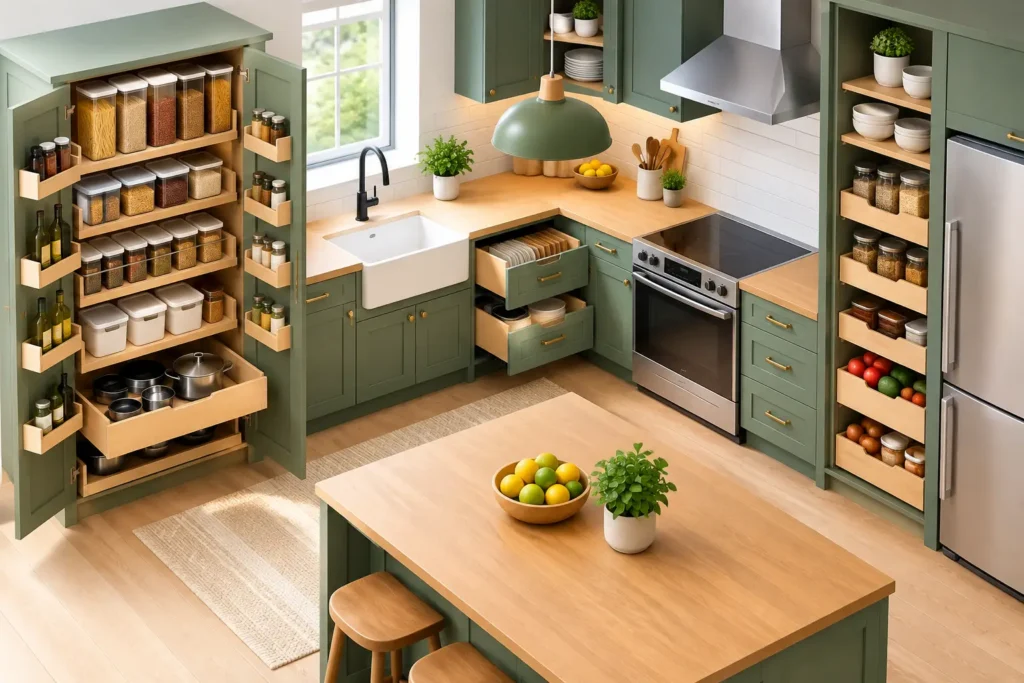
Hinges and drawer operation deserve attention as well. Adjustments, replacements, or soft-close upgrades can make older cabinetry feel more precise in daily use. Where storage is the concern, a refinishing project can sometimes be coordinated with selective interior improvements, such as pull-out trays, drawer organizers, or better pantry storage. Those additions should support the way the household actually cooks and lives rather than follow a trend.
Decorative elements should be used with restraint. Glass inserts, crown molding, furniture-style panels, or a refined range hood surround can add architectural character when they fit the home. In a kitchen with clean existing lines, however, a beautifully executed finish and well-proportioned hardware may be all that is needed.
What to Expect During the Process
A quality refinishing project requires planning because kitchens are central to everyday routines. Homeowners should expect a degree of temporary inconvenience, particularly while doors are removed and finish work is underway. The duration depends on the number of cabinets, the cabinet condition, repairs, finish type, site conditions, and whether related carpentry improvements are included.
Clear protection and clean work practices matter. Floors, counters, appliances, and adjacent rooms need to be carefully covered. Dust control, ventilation, and curing time should be respected rather than rushed. A finish may become dry to the touch quickly, but full hardness develops over time. Treating freshly finished surfaces with care during that period helps preserve the result.
The lowest estimate is not always the most economical choice. Inadequate prep, poor masking, thin coatings, and hurried reinstallation can lead to failures that are costly to correct. Cabinetry is one of the largest visual surfaces in a kitchen. It deserves the same precision expected from any permanent interior improvement.
A Tailored Investment in a Better Kitchen
The strongest kitchen updates are not always the ones that remove everything and start over. In many homes, the better approach is to recognize what was built well, improve what no longer serves the space, and refine the visible details with care. With more than 25 years of hands-on craftsmanship, DoMolding approaches cabinetry with that balance in mind: preserving value where it exists and delivering clean, durable work where change will make the greatest difference.
If your cabinets are sound but the kitchen no longer reflects your home, begin with a close look at the construction, the finish condition, and the way the room supports daily life. A thoughtful refinishing plan can turn a tired kitchen into a more polished, functional space that still feels authentically yours.